
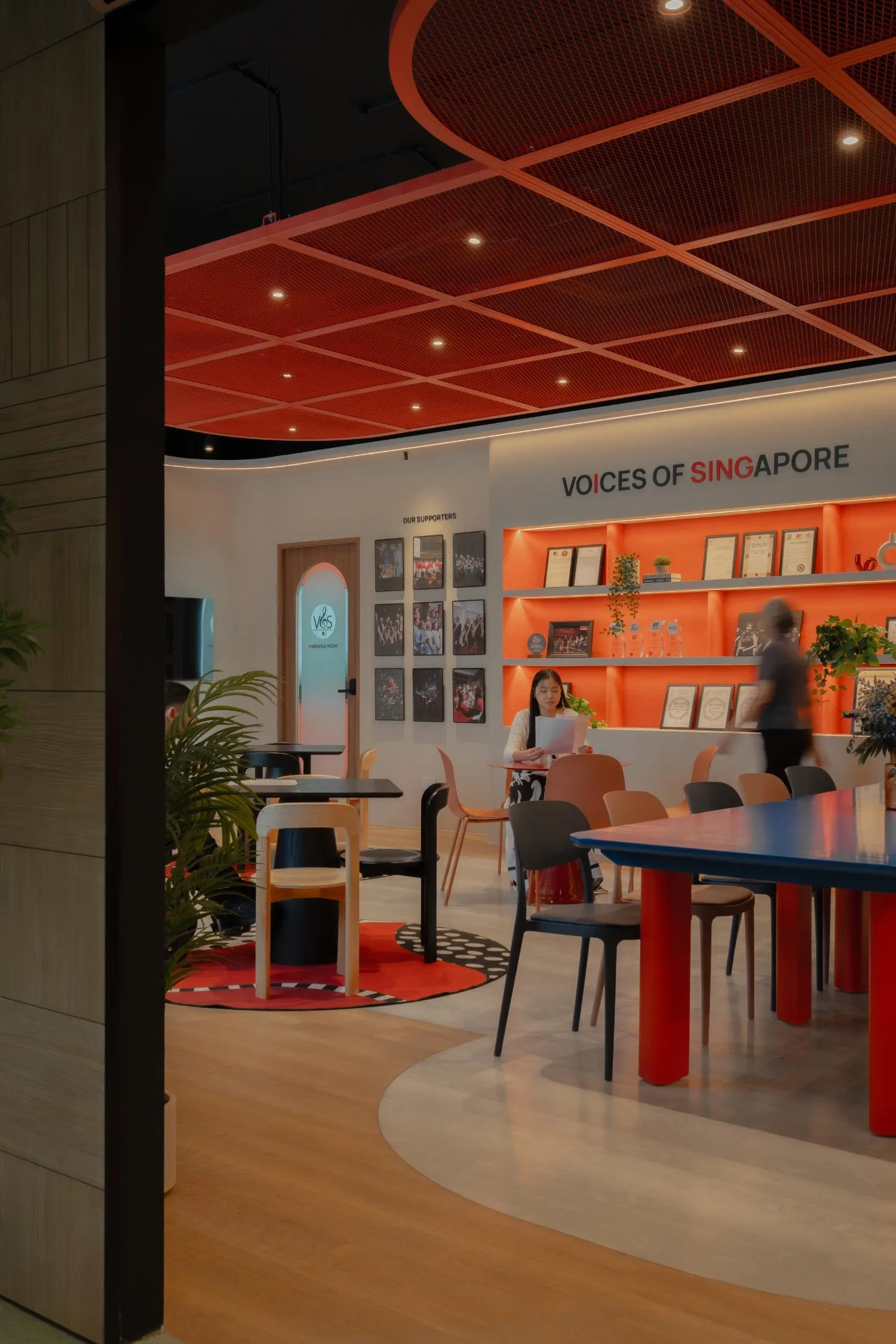
There is a particular kind of silence that exists inside a choir’s rest. It is not empty. It is held breath, suspended energy, the collective readiness of many voices that have learned, through discipline and devotion, to become one.
When MynMyn Studio was tasked with designing the Choral Hub for Voices of Singapore at Lengkok Bahru, they began not with a floorplan or a mood board. They began with a feeling. What does it mean to build a home for harmony?
The answer, it turns out, looks a great deal like the music itself.
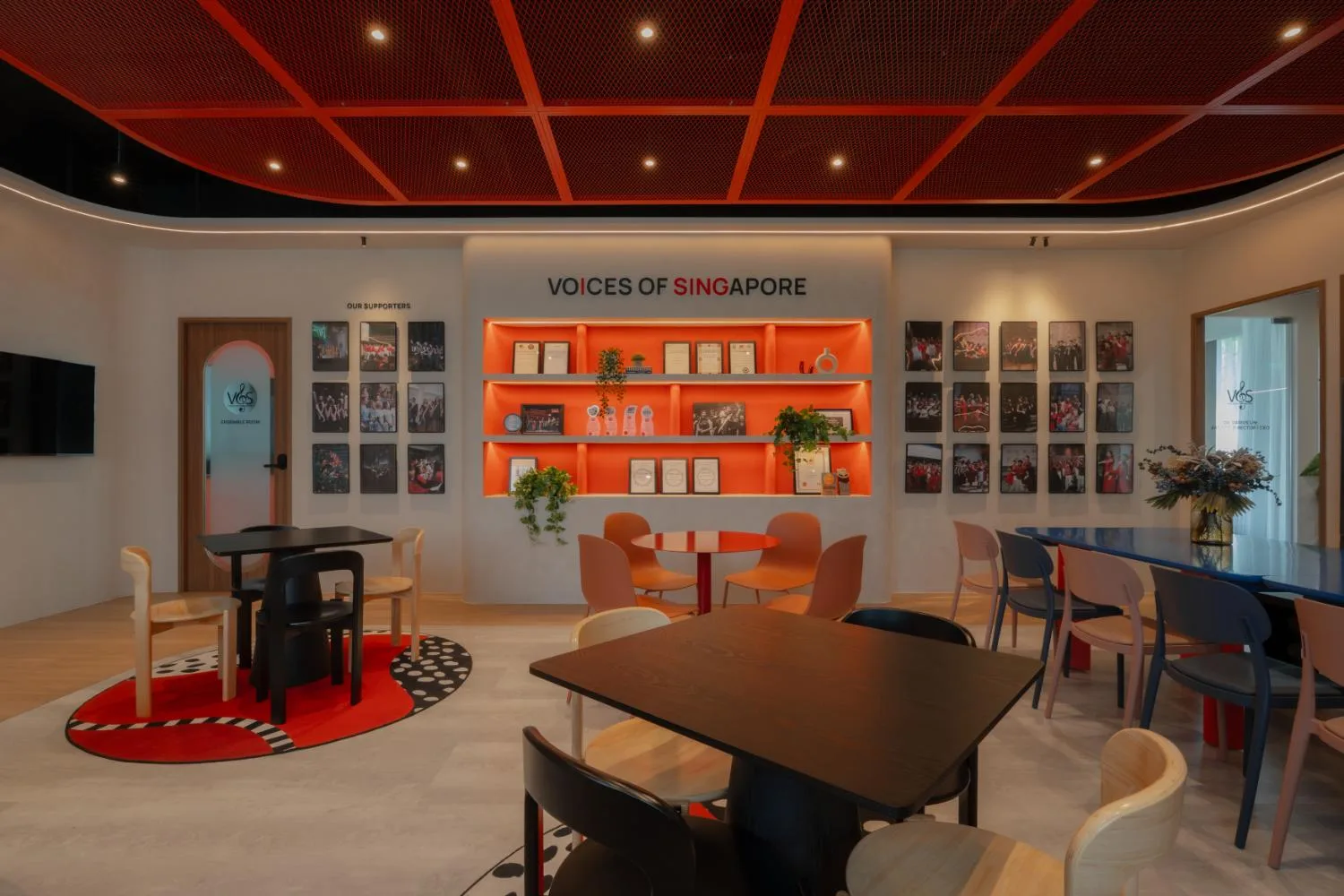
The communal hub at the heart of the Choral Hub — designed for chance encounters and unscripted community life.
Choral music is built on a paradox: the more completely individual voices dissolve into each other, the more powerful the whole becomes. MynMyn Studio drew directly from this idea. Rather than designing a facility in the conventional sense — a recital hall here, a rehearsal room there, corridors connecting the functional dots — they conceived the Choral Hub as a living ecosystem. An interconnected spatial experience where performers, educators, audiences, and everyday community members might encounter one another not by appointment, but by design.
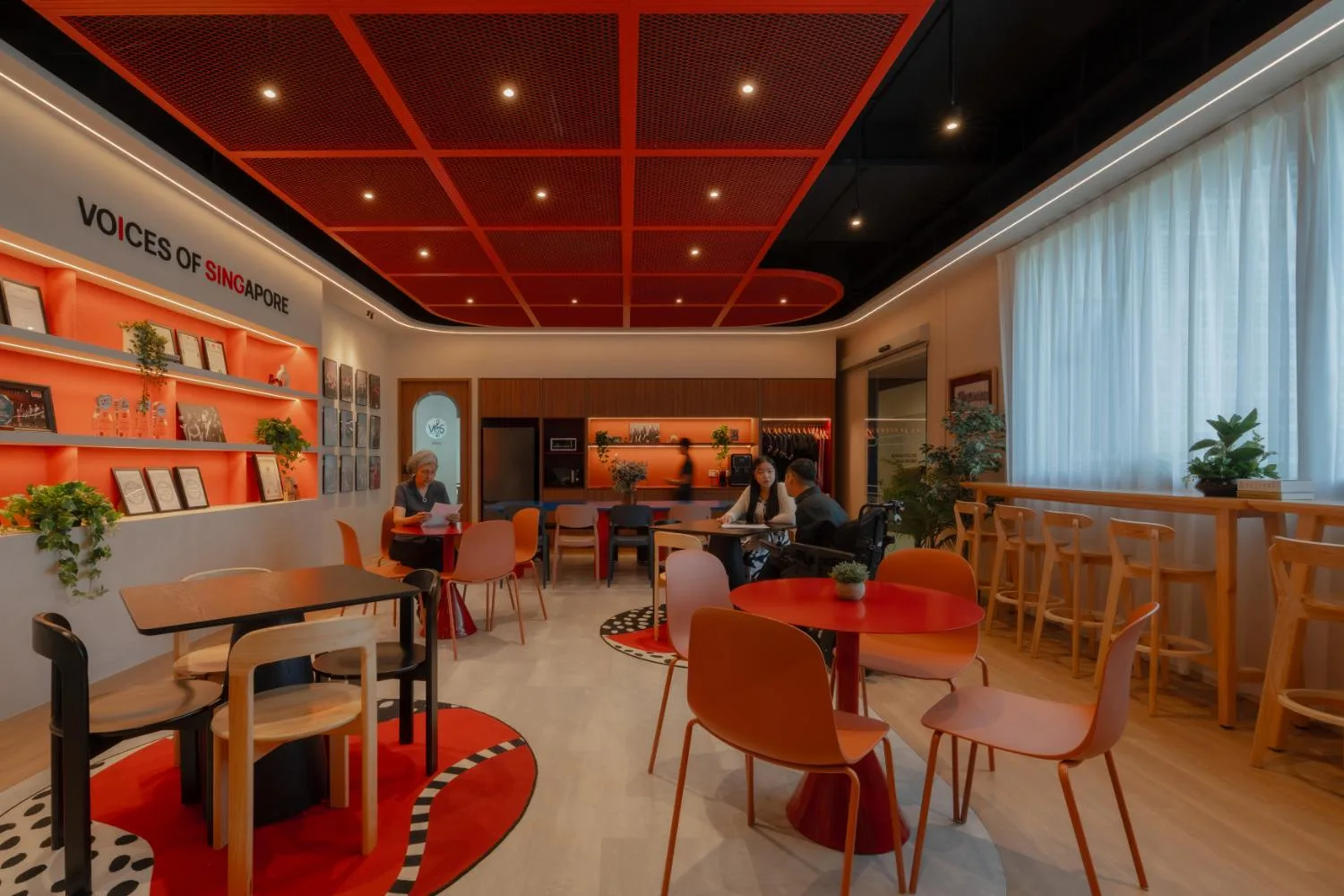
The studio’s signature language of flowing curves and soft transitions was not chosen for its beauty alone, though beauty is undeniably present. These forms carry function. They guide movement without imposing it. They soften the thresholds between spaces, making the passage from public corridor to rehearsal zone feel less like crossing a boundary and more like drawing a breath.
The architecture moves the way music moves: with rhythm, with intention, with an awareness of what comes next.
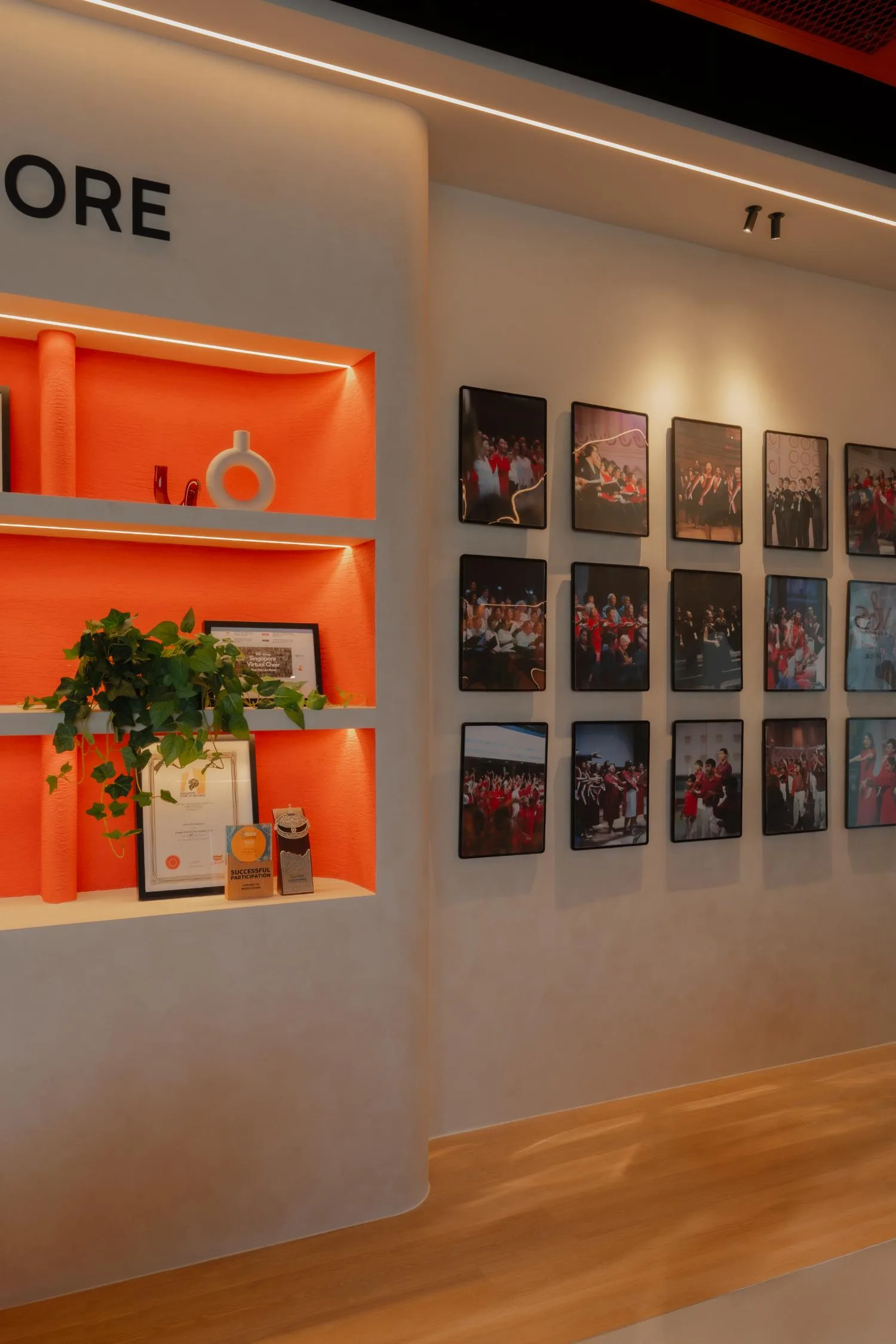
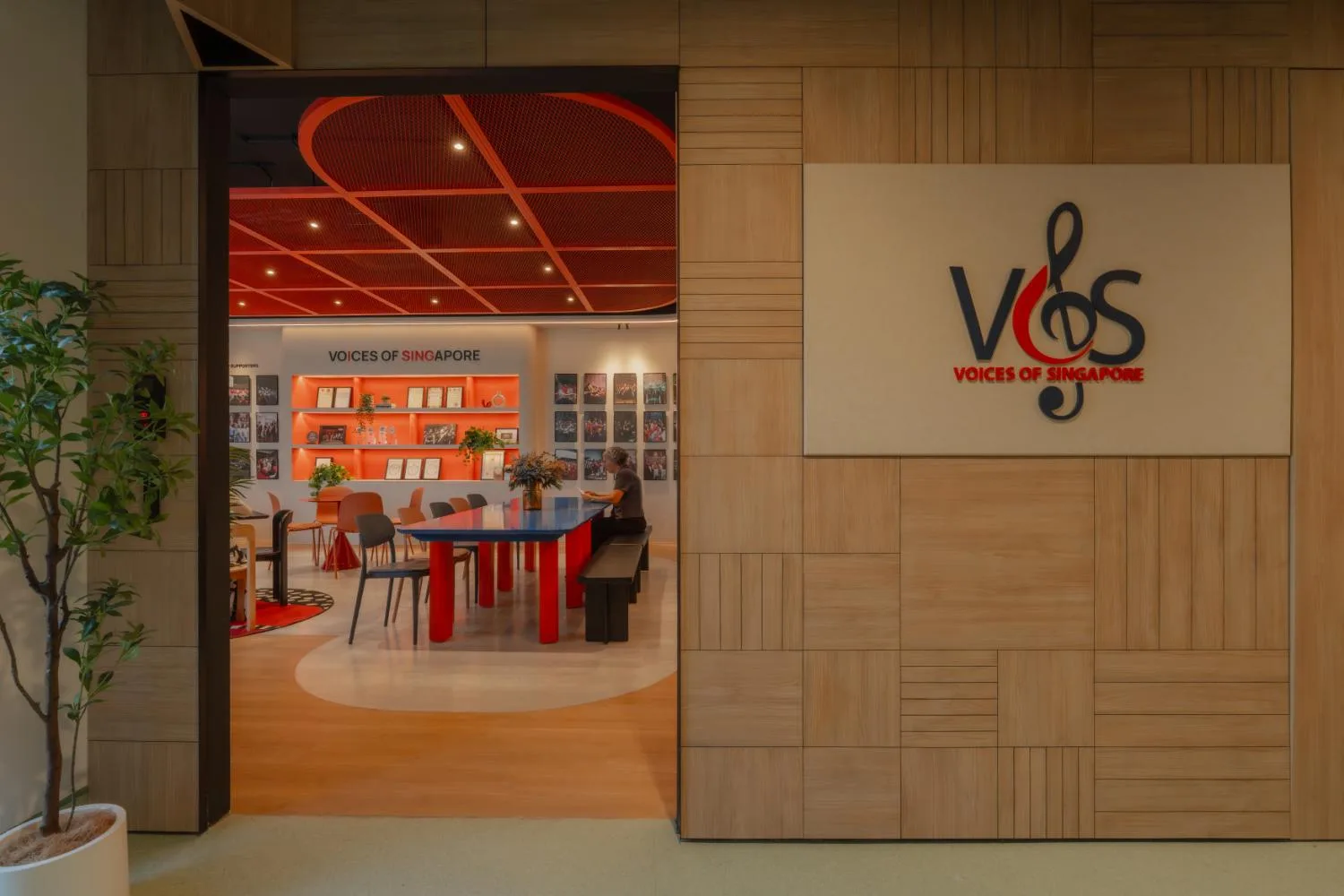
Limewashed finishes, timber warmth, and a palette drawn from themes of passion, trust, and new beginnings.
Enabling Village, where the Choral Hub is located, is not a neutral site. It is Singapore’s most deliberate experiment in inclusive urban living — a precinct where accessibility is not retrofitted but foundational. MynMyn Studio took this responsibility seriously, and it shows in every decision.
The material palette was chosen with a care that goes beyond aesthetics. Limewashed finishes bring warmth without weight. Timber elements introduce the kind of quiet, human-centred comfort that makes a room feel inhabited rather than staged. Concrete-effect vinyl flooring grounds the space practically — resilient, unpretentious, genuinely liveable. Colour, too, was mobilised thoughtfully: the palette draws from themes of passion, trust, and new beginnings, the very emotional registers that choral music has always navigated.
For neurodivergent users and visitors with differing sensory needs, adaptable lighting systems throughout the hub shift the space into a mode of accommodation rather than tolerance. Barrier-free planning was not a box to tick; it was a starting point. In this building, inclusion is structural.
A performance venue must, above all, sound right. And achieving that in a space that also needs to serve as a classroom, a rehearsal studio, a community lounge, and an events venue presents a genuinely complex design problem. MynMyn Studio met it head-on.
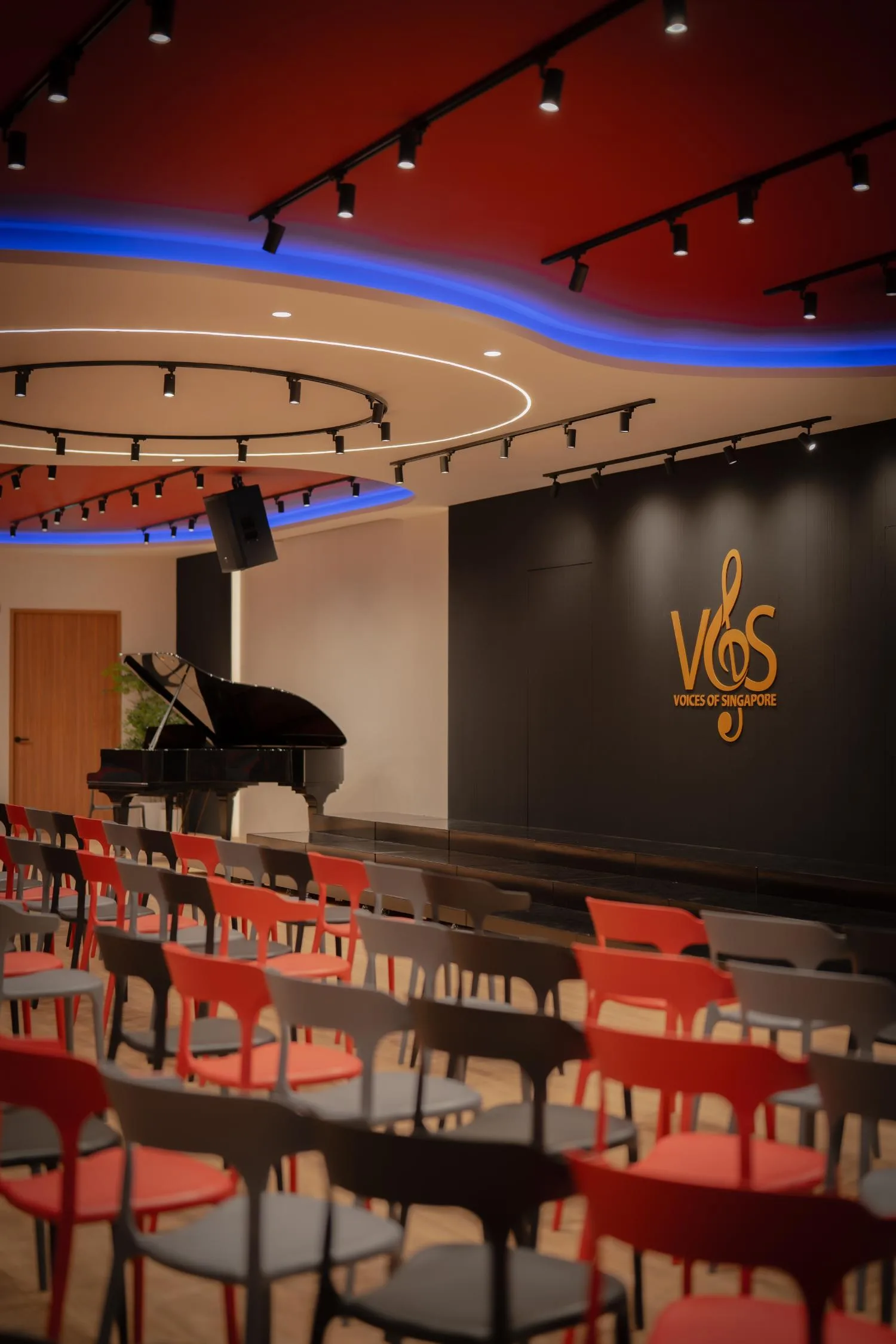
The recital hall — acoustically treated with Green Mark-certified Fabrix Rockwool panels and double-glazed windows.
Fabrix Rockwool acoustic panels — Green Mark certified, their environmental credentials as solid as their acoustic ones — line the recital hall alongside double-glazed windows that seal the space against the city beyond. The result is an interior that breathes on its own terms: warm, responsive, and alive to the sound produced within it. The modular staging system extends this adaptability further, allowing the hall to shift configuration for different formats, audiences, and scales of event without losing its core sense of intimacy.
Sustainability here is not a gesture. Durable finishes were selected precisely because they would not need replacing. The building is designed to last, and to remain relevant, because it was designed to change.
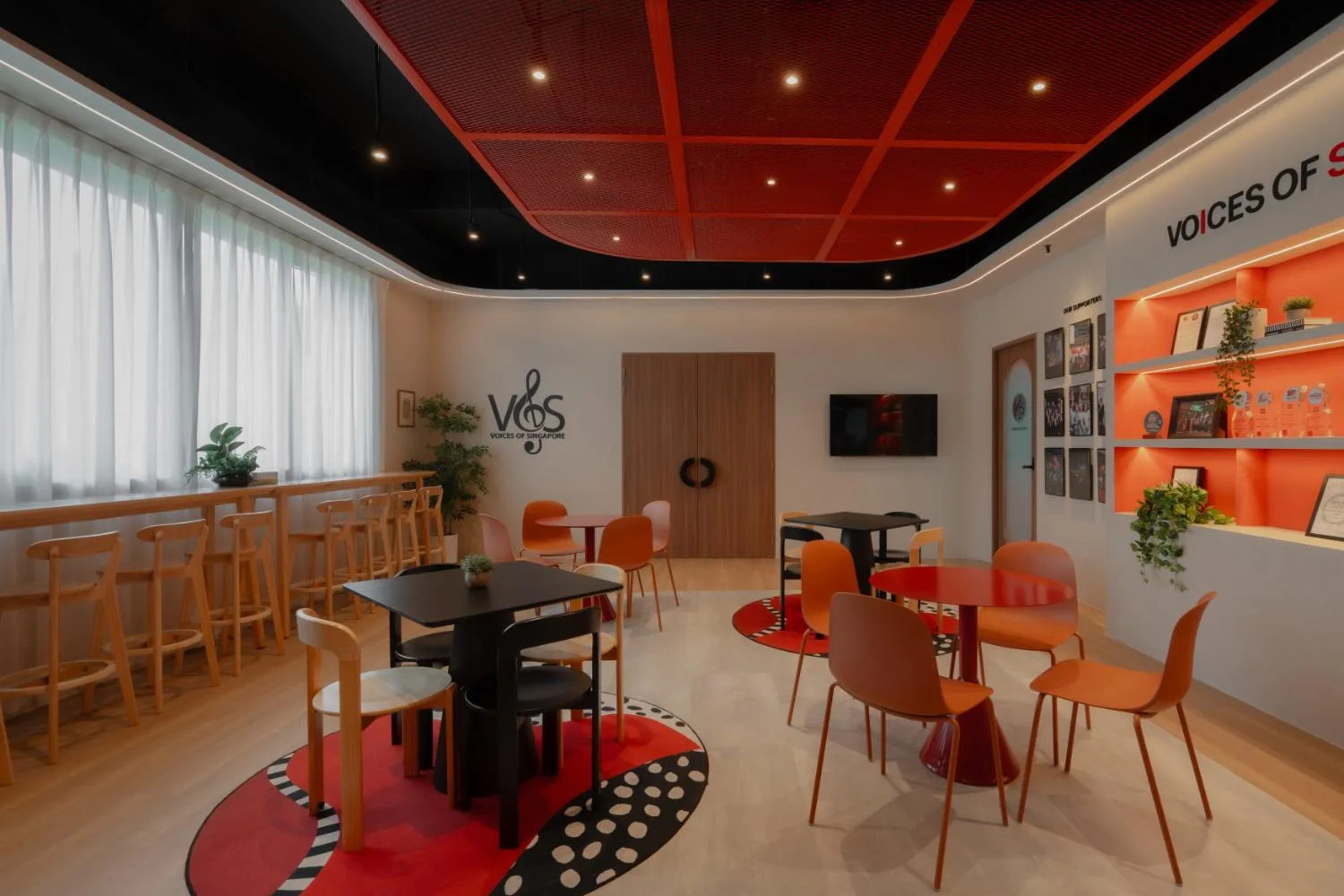
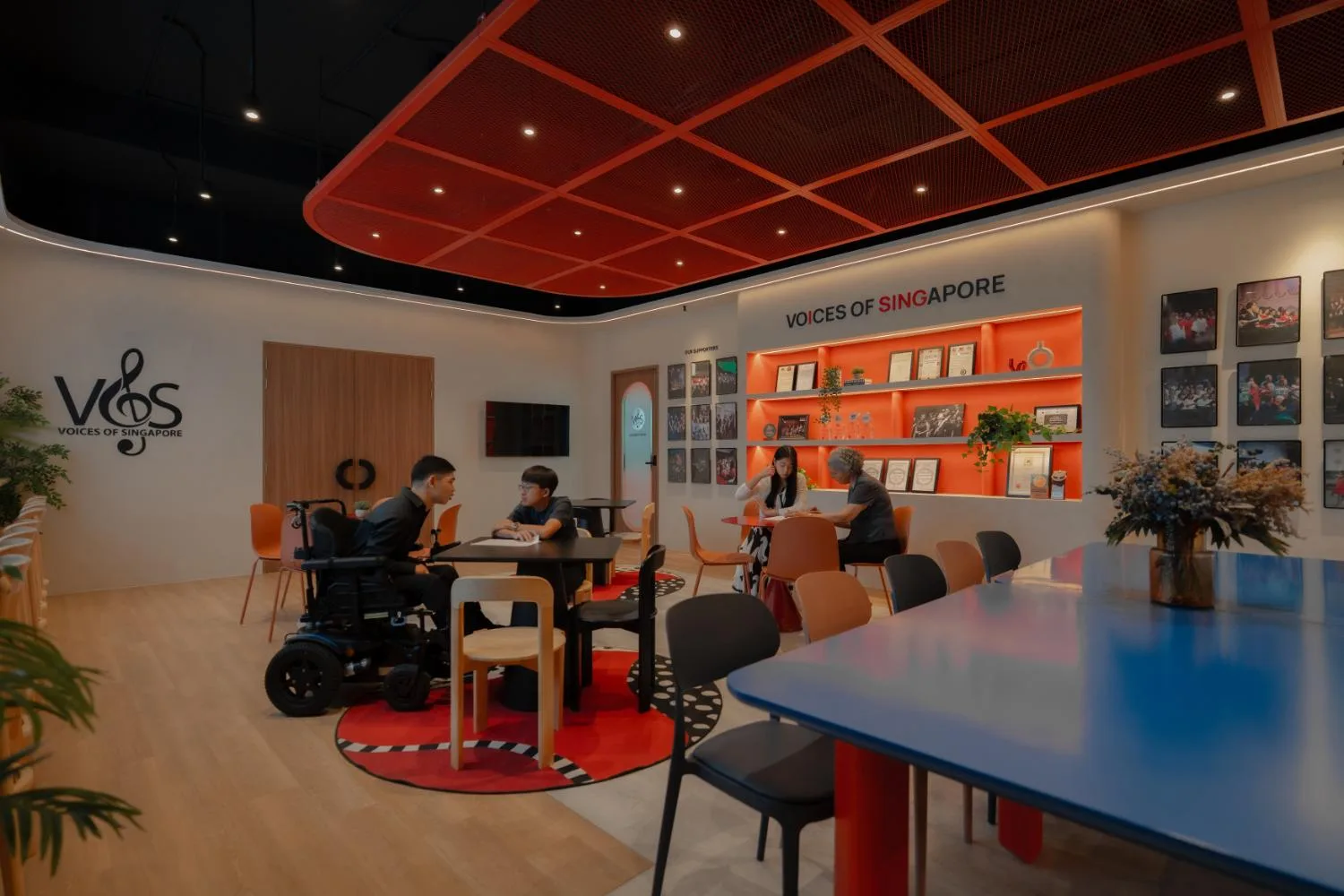
Where community forms between rehearsals — the informal heart of the Choral Hub.
Ask MynMyn Studio which part of the project they love most, and the answer might surprise you. It is not the recital hall, with its considered acoustics and its stage lights. It is the communal hub at the centre of everything.
This is the space where conversations begin without an agenda. Where a choir member finishing rehearsal crosses paths with a first-time visitor, and something shifts. Where friendships are made in the ten minutes between programmes. Where the informal, unhurried, beautifully unscripted moments of community life unfold — the ones that no brief can specify and no architect can fully predict, only create the conditions for.
“We often say that design is ultimately about people,” the studio reflects. “And this space embodies that belief.”
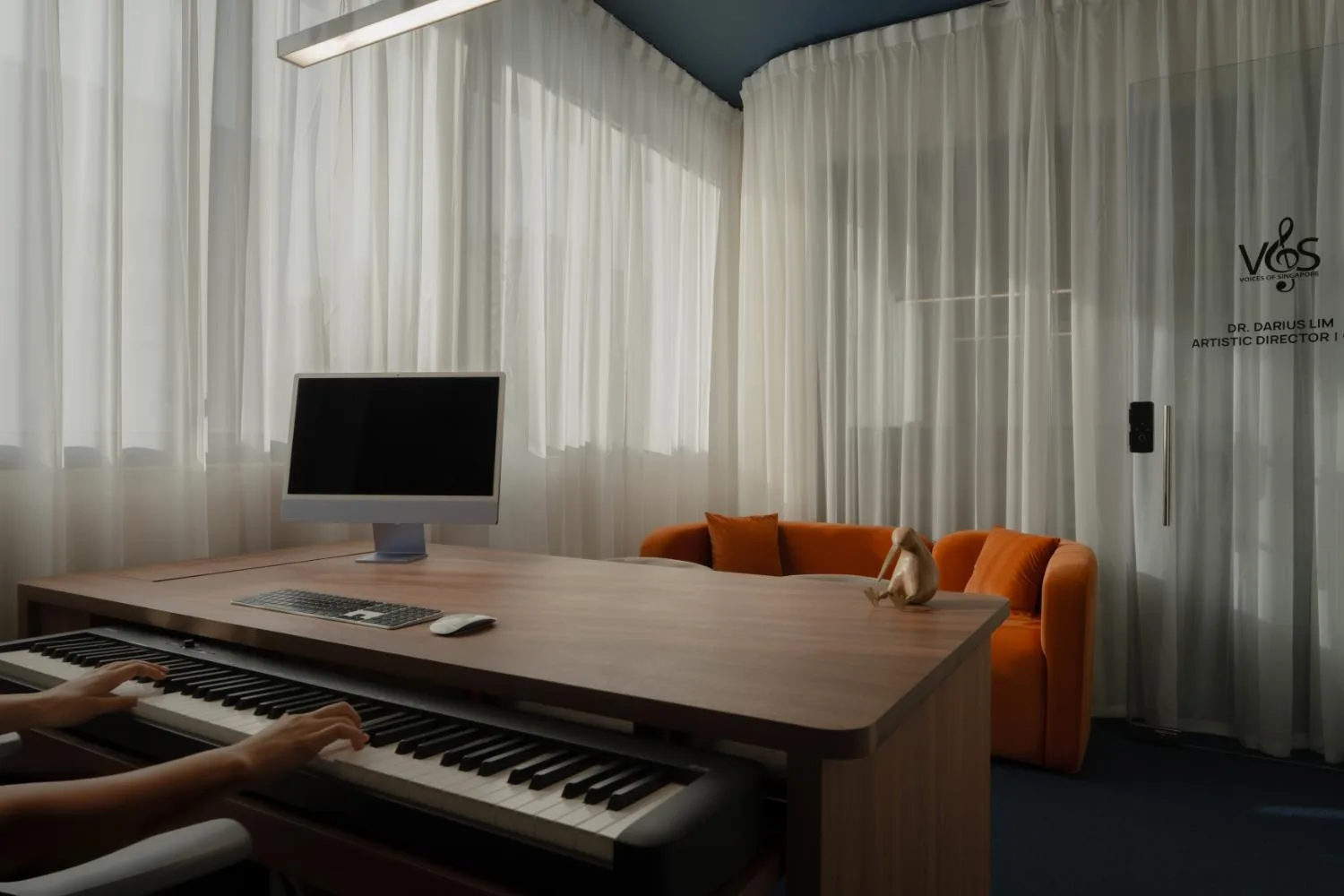
A space conceived not as a fixed object, but as a platform for interaction, collaboration, and community.
The Choral Hub points toward something larger than itself. MynMyn Studio believes the future of interior design will be shaped by three forces: adaptability, accessibility, and social impact. Spaces will need to serve diverse communities rather than singular audiences. Universal design principles and sensory-sensitive environments will move from exception to expectation. And the most enduring interiors will be the ones conceived not as fixed objects but as platforms — stages, in the truest sense, on which human life can continue to improvise.
There is a reason choral music has endured across centuries, across cultures, across every conceivable shift in technology and taste. It is because the act of many people making something beautiful together — something none of them could make alone — speaks to a need that does not diminish. MynMyn Studio understood this intuitively. They did not design a building for Voices of Singapore. They built a place where voices could find each other.